iPhone app / Medical Laboratory Science
ViviCell
-
A free, non-commercial study companion for hematology, coagulation, blood-cell morphology, related pathology, and MLS exam review.
What ViviCell is
ViviCell is an independent educational app built for Medical Laboratory Science students and laboratory professionals reviewing hematology and coagulation. It combines structured lessons, spaced-repetition review, quizzes, case studies, morphology references, cell and pathology atlases, and image-based cell-identification practice in one offline app.
The goal is practical review: learn a topic, enroll its flashcards, revisit material before it fades, train your eye with microscopy images, and use progress insights to decide what deserves another pass.
How the app is organized
Five sections cover the full study loop, from first exposure through practice and reference.
How the app is organized — details
Learn
Study hematology and coagulation modules with objectives, concise explanations, diagrams, flashcards, quizzes, and clinical case studies.
Review
Enroll flashcards from any module and grade each review as Again, Hard, Good, or Easy. ViviCell schedules future reviews from your recall difficulty so weaker material comes back sooner.
Practice
Identify cells and cellular aberrations from real photomicrographs. Practice sessions can focus on specific categories, adjust difficulty, and feed missed or graded images back into Review.
Atlas
Browse blood cells by class, lineage, and category, plus cellular-aberration findings and pathology conditions. Atlas entries emphasize recognition features, common confusions, representative images, and source attribution.
Search
Search across lessons, flashcards, quiz explanations, case studies, morphology cards, cell categories, cellular-aberration findings, and pathology conditions from one place.
Interactive demo · Learn
Browse a module
Tap a module to open a preview of its objectives and a sample section. The full app carries all 15 modules with complete sections, diagrams, and quizzes.
Interactive demo · Review
Try a review session
1 / 5
Which heavy metal exposure classically produces basophilic stippling?
Lead poisoning. When you see basophilic stippling in a child with anemia and abdominal pain, order a blood lead level.
Session complete.
Interactive demo · Practice
Identify the cell
1 / 5
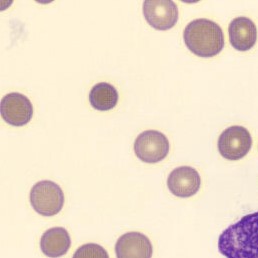
Practice complete. correct out of .
Interactive demo · Atlas
Browse a cell category
Tap a category to see its recognition features, common confusions, and a representative image. The full atlas covers 27 cell categories across WBC, RBC, and platelet lineages with 271 photos, plus 56 cellular-aberration findings and 57 pathology conditions.
Interactive demo · Search
Search the content
Type a term like "sickle," "neutrophil," "lead," or "PT" to search across flashcards, morphology cards, cell categories, and quiz questions.
No results.
Current content snapshot
- 15 learning modules
- Hematopoiesis, hemoglobin, laboratory methods, anemia workups, RBC morphology, hemoglobinopathies, hematologic neoplasms, platelets, coagulation testing, bleeding and clotting disorders, anticoagulant therapy, and body fluids.
- 26 morphology cards
- RBC shapes, fragments, inclusions, color and size variants, agglutination, and poikilocytosis.
- Cell atlas: 3 classes, 6 lineages, 27 categories, 271 photos
- White blood cells, red blood cells, and platelets with category-level recognition guidance.
- Cellular-aberration atlas: 6 groups, 13 subcategories, 56 findings, 218 photos
- Non-RBC aberration findings with recognition features, common confusions, and practice-eligible image identification.
- Pathology atlas: 5 groups, 16 subcategories, 57 conditions, 1,105 photos
- Reference material for myeloid, lymphoid, benign/reactive, iatrogenic, artifact, and other blood-film patterns.
Built for
- Medical Laboratory Science students
- Hematology and coagulation review
- Blood-cell morphology practice
- Certification and examination preparation
- Laboratory professionals refreshing foundational knowledge
Private by design
ViviCell requires no login and works without a network connection. Study progress, quiz responses, review schedules, practice insights, and preferences are stored locally on your iPhone. The app contains no advertising, analytics, remote configuration, authentication, or tracking SDKs.
Credits and licensing
Educational summaries, flashcards, quizzes, and case studies are authored for ViviCell and reviewed against standard MLS hematology, coagulation, morphology, and clinical laboratory science references. Most cell and morphology images come from CellWiki under CC BY-NC-SA 4.0; a smaller number come from Wikimedia Commons under CC BY 4.0 or Public Domain terms. Image credits are preserved in the app.
Cell images used in the interactive demos on this page are reproduced from CellWiki under CC BY-NC-SA 4.0:
- Spherocyte — cellwiki.net
- Sickle cell — cellwiki.net
- Schistocytes — cellwiki.net
- Teardrop cell — cellwiki.net
- Basophilic stippling — cellwiki.net
- Target cells — cellwiki.net
- Neutrophil (segmented) — cellwiki.net
- Lymphocyte — cellwiki.net
- Monocyte — cellwiki.net
ViviCell is permanently free and non-commercial.
Important scope
ViviCell is an educational study tool. It is not intended for clinical diagnosis, patient care, or medical decision-making. Always confirm findings against established references and your institution's protocols.